Commercial greenhouse operators are being advised to treat winterization as an operational readiness program, not merely a heating task. Winter conditions put more pressure on structures and equipment: heating systems run longer, ventilation strategies change, snow and ice add structural loads, and small gaps or equipment faults that were minor in warm weather can become costly.
The checklist begins with the building envelope. Growers should walk the greenhouse inside and out to check framing connections, doors, vents, glazing, poly coverings, seals and exterior components for damage or looseness. Weather stripping, aging seals, loose panels and gaps around doors or vents can let air and moisture enter, increasing heat loss and complicating environmental control. Poly-covered houses should be checked for punctures, tears, looseness and deterioration; inflated double-poly systems should have their inflation equipment verified.
Because snow and wind requirements vary by location and greenhouse design, operators should confirm that structural components are maintained according to the intended design and local requirements. If structural condition or winter loading is uncertain, the guidance says to involve the manufacturer or a qualified professional before a major storm.
Heating and controls need equal attention. The checklist covers boilers, unit heaters, radiant systems, pumps, fans, thermostats, sensors and distribution equipment. It also calls for testing circulation and horizontal airflow fans, confirming vents and louvers open and close correctly, inspecting controls, alarms and backups, checking fuel supplies or delivery arrangements, and reviewing generator or emergency power procedures.
Environmental controls deserve specific review because humidity, airflow, ventilation and temperature interact. Reducing ventilation too aggressively to save heat can create humidity problems, condensation and uneven growing conditions. The aim is to meet crop requirements while operating the greenhouse efficiently.
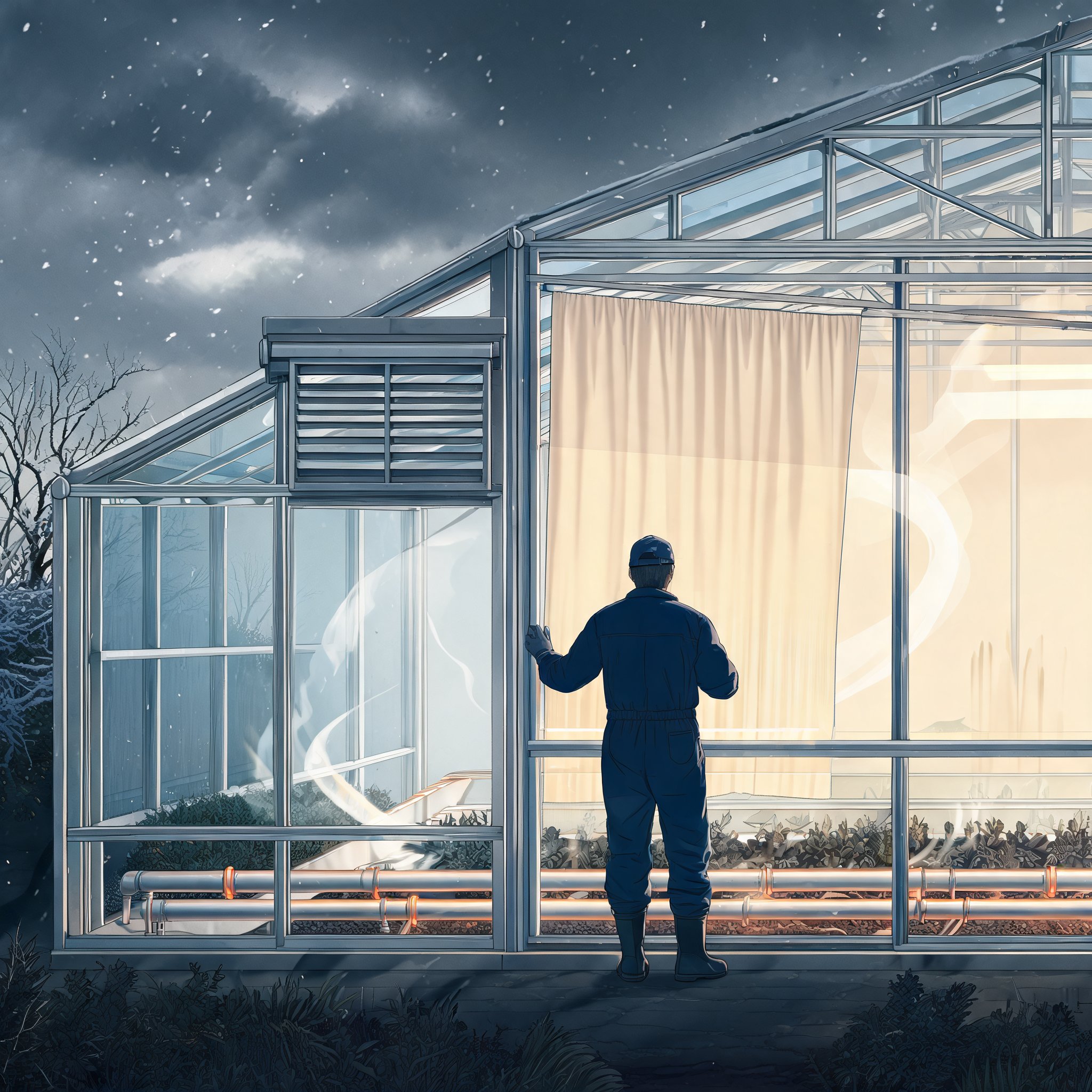
Energy-saving equipment should be inspected before nightly use. That includes retractable energy curtains or thermal screens—material, drive system, cables, motors, sensors and controls. Some growers add inflated polyethylene over polycarbonate or glass sidewalls and gable ends for seasonal insulation. Equipment and storage areas should also be kept from disrupting airflow or heat distribution, and growers should review whether current production layouts still match the original design.
A winter plan should assign responsibility for monitoring snow accumulation, heating equipment, alarms, backup power and vents during storms or extreme cold. Gutters, drainage paths and areas around the greenhouse should be kept clear where practical, and doors and emergency exits should remain accessible. In snow-prone climates, dedicated gutter snow-melt piping can operate as a separate heating zone when snow or ice is present, potentially allowing energy curtains or blackout systems to stay closed instead of opening to warm the roof and gutters.
Snow removal should follow recommendations for the specific greenhouse design. Improper removal can damage coverings or structural components, and unnecessary activity on or around a snow-loaded greenhouse can create safety risks. Operators should know the snow and wind conditions the structure was designed to handle and have a response plan for unusual weather.