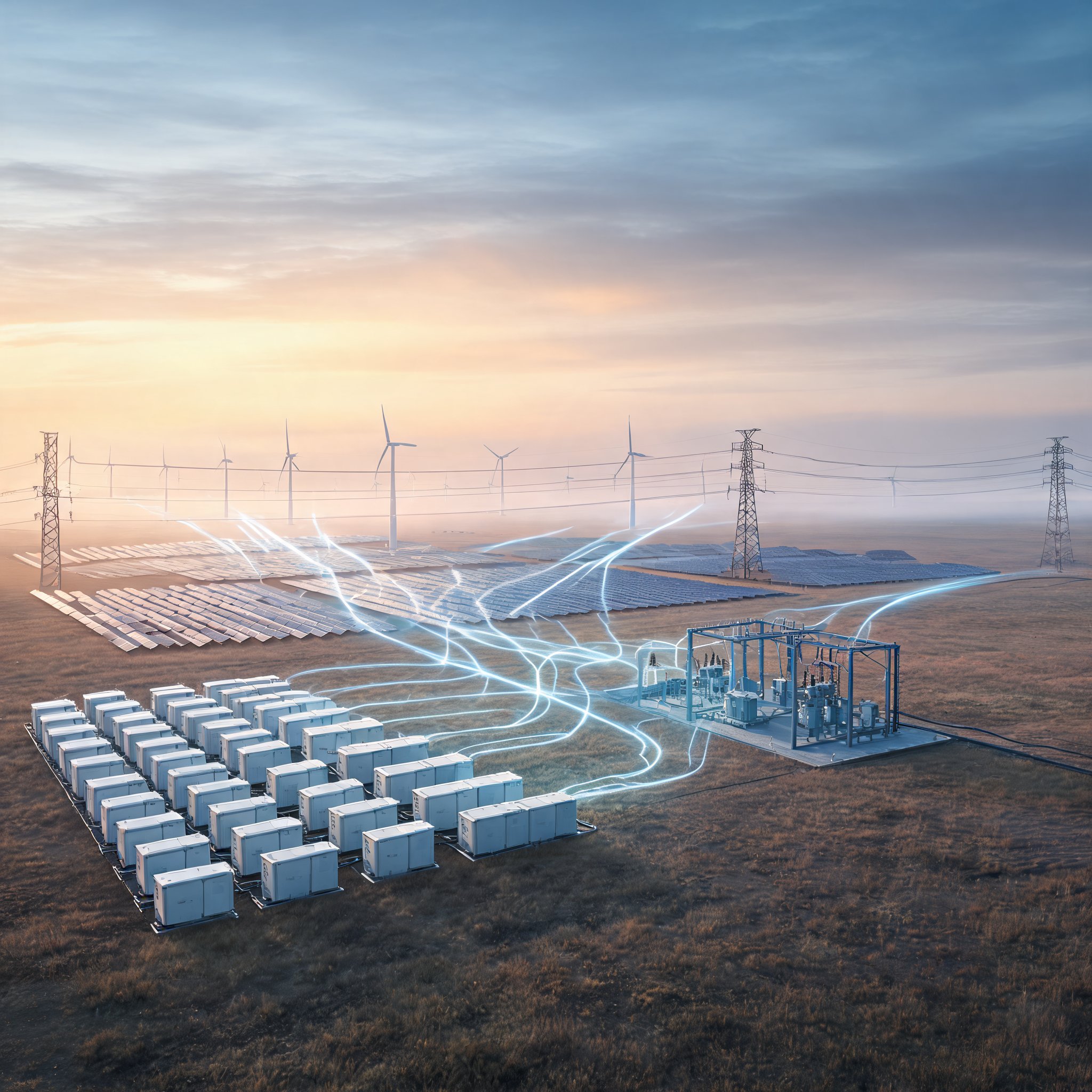
China’s operational new-type energy storage fleet reached 167 GW/435 GWh at the end of September 2026, 63% higher than a year earlier, according to National Energy Administration figures presented at its quarterly press conference on Oct. 30. The category covers electrochemical, compressed-air and other emerging storage systems but excludes conventional pumped hydro.
The headline number marks a net addition of about 31 GW/84 GWh in the first nine months of 2026, compared with 135.93 GW/351.12 GWh at the end of 2025. That comparison is important because it shows both the scale of new construction and the changing mix of what is being added.
Capacity growth is not the only change
Average storage duration reached 2.61 hours, up about 0.27 hours year on year. Equivalent utilization hours rose to around 915 hours during the nine-month period, about 10 hours more than in the same period of 2025. The NEA said the improvements suggest that China’s storage expansion is being accompanied by gradual changes in system configuration and utilization, rather than growth in installed capacity alone.
Those gains are modest relative to the pace of capacity growth, but they point to a different phase. A fleet can become larger without becoming more useful if assets are poorly configured or rarely dispatched. Duration and utilization are therefore better indicators of whether storage is being integrated into grid operations rather than simply counted in construction statistics.
Renewables create the need for flexibility
The demand backdrop is clear. Combined wind and solar generating capacity exceeded 2.01 TW at the end of September, accounting for approximately 48.7% of total installed power capacity. As variable renewable generation expands, storage is increasingly needed to absorb surplus electricity, shift generation to higher-demand periods and provide fast-response grid services.
The NEA attributed rapid development of new-type storage to government policies, technological innovation, industrial supply chains and growing demand for flexibility in the power system. Those factors help explain why China has been able to deploy storage at large scale, but they do not by themselves guarantee that every project will be used efficiently. The utilization data offer an early check on that question.
The market is shifting toward independent storage
The structure of China’s storage market is also changing. Official figures for 2025 showed that independent energy storage facilities accounted for 51.2% of cumulative new-type storage installations. Projects rated at 100 MW or above represented 72% of installed capacity, while systems with durations of at least four hours accounted for 27.6%.
Lithium-ion batteries remained the dominant technology, representing approximately 96% of installed new-type storage capacity. Compressed-air, flow batteries and other technologies are gradually expanding their presence, but the fleet remains overwhelmingly lithium-based.
Market reforms are expected to reinforce these trends. China has been developing arrangements that allow independent storage operators to earn revenues from electricity trading, ancillary services and capacity remuneration. The aim is to gradually reduce reliance on mandatory storage requirements associated with renewable projects.
That shift matters for utilization. If storage is built mainly to satisfy a renewable project requirement, its operating incentives may be secondary. If independent operators can earn revenue from multiple services, the business case depends more directly on dispatch, availability and performance. The transition is not complete, and the NEA data do not show how much revenue storage assets are actually earning. But the direction of policy is consistent with a system that values operational use, not only installed capacity.
A regional test case in western Inner Mongolia
The growing contribution of storage is already visible in renewable-rich regional grids. In western Inner Mongolia, the grid operator reported 20.23 GW/70.47 GWh of operational storage capacity in October. During emergency dispatch operations, storage supplied up to 12.25 GW, equivalent to 33% of the grid’s electricity demand at the time.
That example illustrates how storage can provide substantial short-term balancing capacity in electricity systems with high renewable penetration. It does not show that storage can cover all system needs or replace other forms of flexibility. The figure is a peak contribution during emergency dispatch, not an average or a guarantee of continuous supply.
For other countries expanding wind and solar generation, China’s deployment offers experience in large-scale storage manufacturing, grid integration and centralized dispatch. The model is not simply a matter of building more batteries. It also involves procurement, grid connection, dispatch rules and market arrangements that determine whether storage is available when needed.
The 2030 target raises the bar for utilization
Under China’s 15th Five-Year Plan for power system development, new-type energy storage capacity is targeted to reach 300 GW by 2030, with greater emphasis on longer-duration systems, grid-forming capabilities and improved operational efficiency. The target is a plan, not an installed outcome, and it implies a continued buildout from the 167 GW reported for September 2026.
The emphasis on longer duration is significant. A fleet with more hours can shift energy across longer periods, but longer-duration systems can also be more expensive and may need different market signals. Grid-forming capabilities are similarly important for integrating high shares of inverter-based renewables. Operational efficiency, meanwhile, depends on how storage is dispatched and compensated.
The latest figures therefore tell a two-part story. China’s storage fleet is expanding rapidly, and utilization is improving slightly. Yet the improvement is incremental, while the policy target is ambitious. The gap between installed capacity and effective use will be the central issue to watch as the market moves away from mandatory buildout and toward revenue-based operation.